 Image 1 of 3
 Image 2 of 3
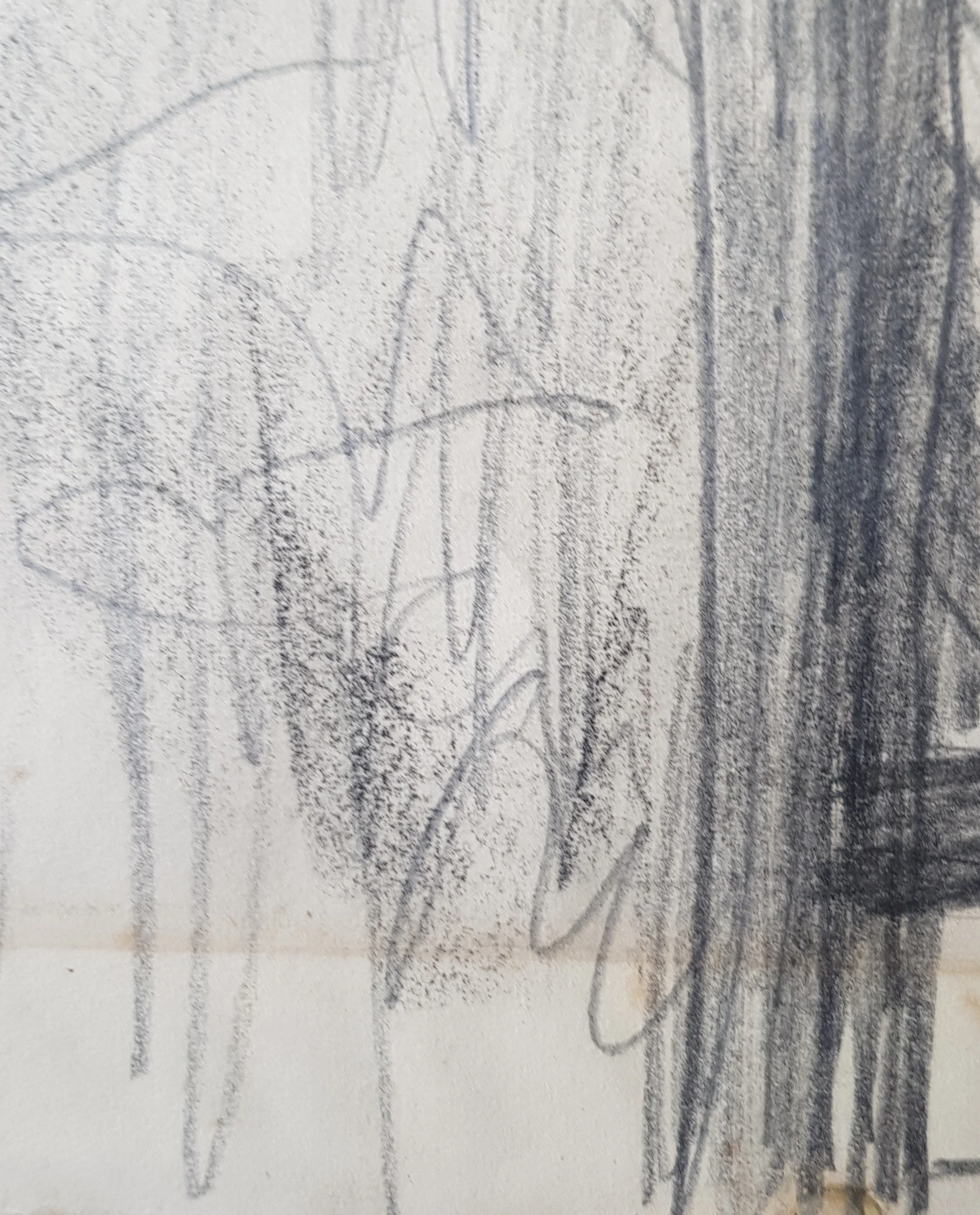 Image 3 of 3
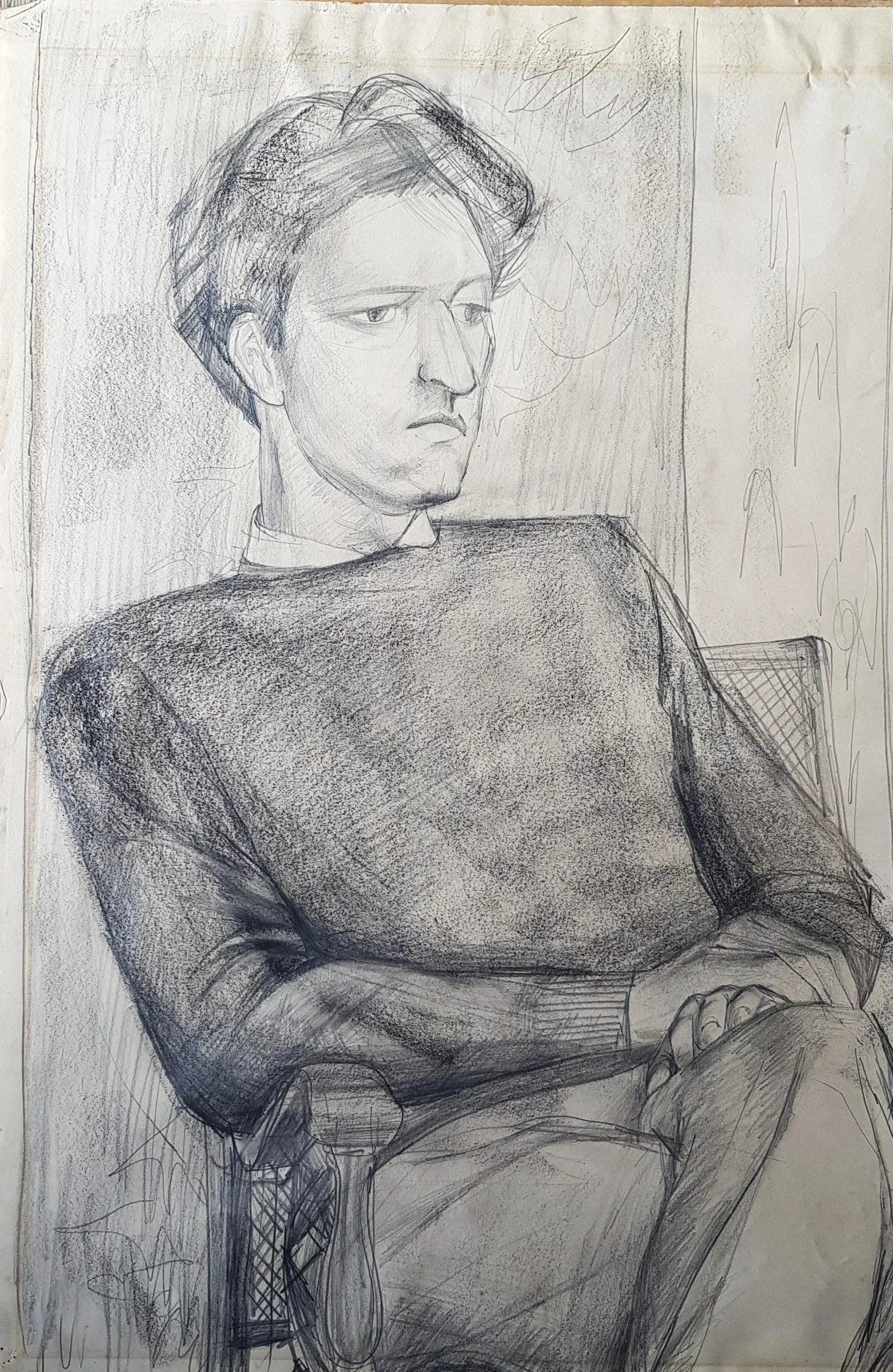
Christopher Nevinson (1889-1946) portrait of a man, pencil and black chalk, in a contemporary frame. Signed below left CRWN
Dimensions: 55 cm x 38 cm, with frame 62 cm x 44 cm
Condition
There is mount burn around the edges of the drawing and two small areas of paper have ‘pulling’ most likely from tape being applied and taken off. The image itself is in very good condition.
Essay on this drawing
Christopher Richard Wynne Nevinson was associated with the Vorticist movement early in his career, and his drawings of figures were strongly influenced by Wyndham Lewis, who was one of the leading figures of Vorticism.
Wyndham Lewis’s style emphasized angular, machine-like forms and dynamic compositions, reflecting a fascination with modernity, movement, and mechanical power. Nevinson adopted a similar approach in his early works, especially around 1914–1916, when he was involved with Lewis’s journal Blast and produced sharp, geometric depictions of the human body and urban scenes.
However, Nevinson’s later work diverged from Lewis’s more abstract style — he moved toward a more realistic and emotive portrayal of war and human suffering, particularly evident in his World War I paintings and drawings such as La Mitrailleuse and Paths of Glory.
Christopher Nevinson (1889-1946) portrait of a man, pencil and black chalk, in a contemporary frame. Signed below left CRWN
Dimensions: 55 cm x 38 cm, with frame 62 cm x 44 cm
Condition
There is mount burn around the edges of the drawing and two small areas of paper have ‘pulling’ most likely from tape being applied and taken off. The image itself is in very good condition.
Essay on this drawing
Christopher Richard Wynne Nevinson was associated with the Vorticist movement early in his career, and his drawings of figures were strongly influenced by Wyndham Lewis, who was one of the leading figures of Vorticism.
Wyndham Lewis’s style emphasized angular, machine-like forms and dynamic compositions, reflecting a fascination with modernity, movement, and mechanical power. Nevinson adopted a similar approach in his early works, especially around 1914–1916, when he was involved with Lewis’s journal Blast and produced sharp, geometric depictions of the human body and urban scenes.
However, Nevinson’s later work diverged from Lewis’s more abstract style — he moved toward a more realistic and emotive portrayal of war and human suffering, particularly evident in his World War I paintings and drawings such as La Mitrailleuse and Paths of Glory.